

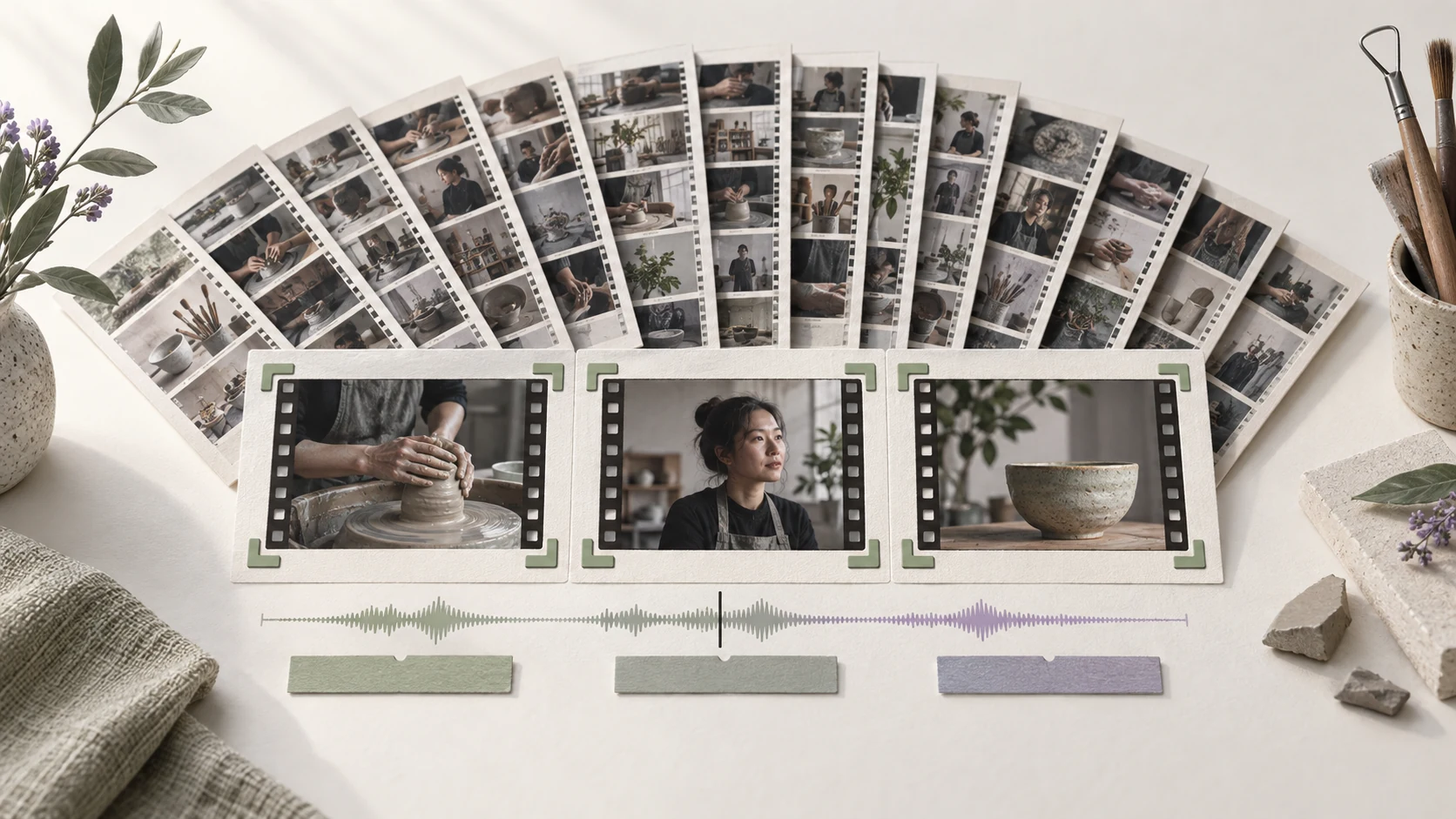
Footage overload is fundamentally a context problem
With dozens of files or hours of recordings, the first editing cost is not operating a timeline. It is building memory: who said what and when, which shots repeat, which take sounds better, and which angles cover the same event. That temporary memory becomes unreliable as the library grows.
Folders answer “where is the file?” but not “which range can open the story?” Manual tags help, yet they tend to be sparse and subjective, and rarely cover speech, action, emotion, and technical quality at the same time.
The practical value of AI is turning footage into project context that can be queried, allowing a creator to ask story-level questions before watching every minute.
THE SHORT ANSWERBuild reviewable selects and structure before polishing pace. It is more dependable—and easier to correct—than a one-click video.
Index first, then return ranges that can be verified
OriginCut reads media information, transcripts, shot boundaries, and visual clues, breaking long recordings into time-coded evidence. A search for “every answer about pricing” should return exact in and out points, speech, and source—not merely a filename.
Visual footage needs the same precision. “Sunset shots” might include a wide landscape, a silhouette, a camera operator, and ambient details. The Agent can recall candidates semantically, then narrow them by duration, clarity, people, and shooting order.
Every result should return to playable source media. Semantic models can miss or misread a moment, which makes candidates and timecodes more valuable than one confident conclusion. The creator can verify quickly, and the Agent can widen the query when needed.
Selects are reasoned material decisions, not a finished film
After relevant ranges are found, dumping every candidate onto a timeline creates a new form of clutter. A better intermediate result is a set of selects: what role each range could play, which answer or event it supports, why it is worth keeping, and whether an alternate exists.
An interview may organize selects by argument. A travel film may use event, place, and time. A product recording may group material by task, error state, and final result. Different projects need different narrative dimensions; one fixed template cannot make every decision.
Selects create agreement before execution. Remove candidates that miss the direction, ask for quieter imagery, or mark one sentence as essential without first dismantling a timeline full of unwanted clips.
A first cut should expose structure before polishing pace
Once candidates are accepted, the Agent can propose a structural summary: how the opening establishes the question, how the middle advances information, and where the ending lands emotionally or logically. It should also explain where main video, supporting imagery, captions, and music belong.
Execution turns cited ranges and the plan into real clips and track operations. The purpose of a first cut is not immediate polish. It is to make the story playable from beginning to end so gaps, repetition, and imbalance become visible.
When the structure fails, moving a passage or replacing a candidate matters more than polishing a transition. Validating structure before rhythm prevents spending time on material that will not survive the next revision.
The timeline returns machine-scale work to human judgment
An Agent is good at reading large amounts of information, preserving search conditions, and repeating operations. A creator is better at deciding which second carries emotion, which sentence needs room, and why an imperfect shot feels true. The timeline is where those abilities meet.
Play the first cut, replace a shot, adjust a pause, rewrite a caption, or ask the Agent for another pass based on feedback. Each change starts from the existing project state instead of generating an unrelated answer that is difficult to compare.
A useful AI footage workflow does not try to remove the creator. It concentrates viewing and judgment on the candidates and structural decisions that matter. Time is saved by reducing search and repetition, not by eliminating creative choice.
Questions, answered
Will AI edits change my original files?
No. Non-destructive editing changes the project timeline while source media remains untouched.
Can I make precise changes after the first cut?
Yes. Reference a clip, caption, or time range and tell the Agent what to change. Play the result to review it, and undo or redo when needed.
Does indexing need to run from the beginning each time?
Usually not. An index can be reused and updated incrementally when media is added, removed, or changed.
Can semantic search replace watching footage?
No. It narrows the field and presents candidates. Important ranges should still be checked against the original picture, sound, and surrounding context.
How much footage makes this workflow worthwhile?
It becomes useful whenever search and organization consume meaningful time: dozens of short clips, long interviews, multi-camera events, or a growing library of product recordings.